

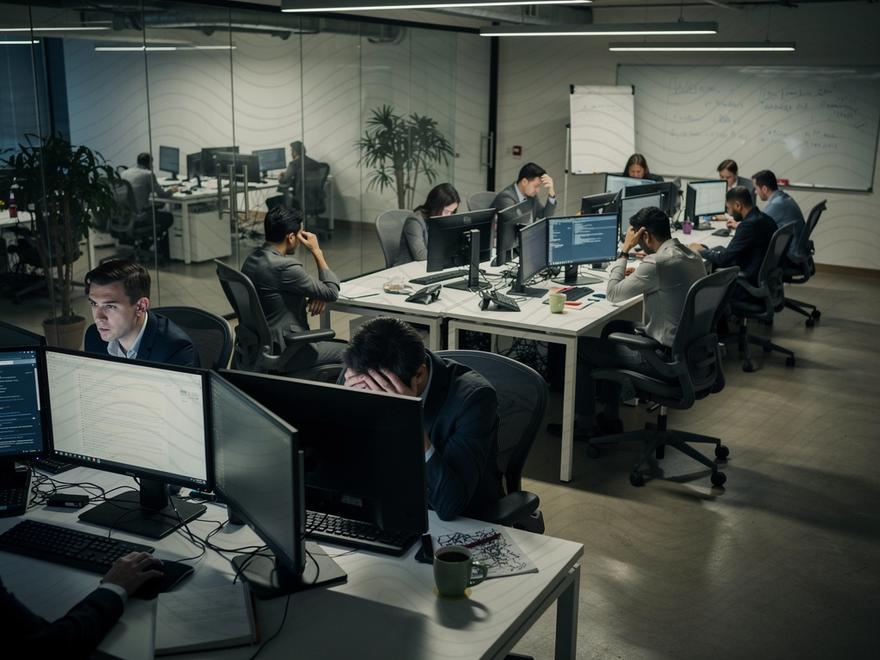
In your company, there is so much more going on than just getting tasks done. As human beings, we have hope, dreams, concerns, fears and many other aspects that influence the way we work. We are not just following standard operating procedures – we are whole persons that come to work, and that is one of the things that separates us from AI agents.
Have you ever been surprised by how employees have reacted to a certain event in your company? It could be an announcement about changing the structure of the organisation, a change of strategy or simply introducing a new operating model. You surely have. The question is: why did employees act in an unforeseen way? Well, this is due to psychodynamics playing in.
Your organisation – whether it is a team, a department or something larger – can be seen as a system that takes input from the surrounding world, crunches this and delivers output back to the surrounding world. This is done through what we could call the main assignment. We often think of this as linear work: we go straight forward by following standard operating procedures with predictable output. We are in control by use of plans and task breakdowns, where the employees are doing what is expected of them. Humans acting like semi-automated robots – or AI agents, if you will.

Although we often make plans that build on such assumptions, it usually does not play out like that. Here is why: there are deeper layers in an organisation than just getting jobs done. We can call them psychodynamics, which is about the employees’ often having irrational thoughts about the job they do and what else is going on in the company. The psychodynamics influence the main assignment and vice versa. Psychodynamics are caused by we as humans all having our own individual understanding of what is going on. Truth is plural in human interactions, and we are all acting due to our personal intentions. We all have fantasies about the motives of our opponents, and we are afraid of looking incompetent or stupid. At the same time, we are also hardwired to unconsciously act on feelings of threat or reward. All of this leads to irrational behaviour.
Introducing AI will amplify the psychodynamics that are at play in your company because people are concerned about what this will mean for them. How will it influence what they do? Can they manage the change? Will they lose their job? Will they be able to have time for their families now they need to grow new competences? Will they be able to pay their mortgage?
As an Agentic Leader, you must be a catalyst for change, and part of this is to provide the best possible environment for your employees. They and you will most likely fail with some of the change initiatives along the way, and while failing due to lack of engagement should not be accepted, failing will be inevitable. It is about providing enough safety so the employees do not fear failing so much that they are not taking initiative. In many organisations, the penalty for failing is harder than the penalty for sitting on your hands. Is that what you want? Guess not. Your employees should not fail due to doing stupid things, but you could consider making it part of your culture that if you do not occasionally fail, you are not trying hard enough.
Ingredients in providing a safe environment for your employees are, first of all, your ability to be a role model. Next, it is your emotional intelligence. If you state that failing is an opportunity to learn but you react strongly to failing with hard consequences for those that failed, then it does not work. You must practise what you preach to provide positive psychodynamics in a safe environment.
